How to Recycle Broken Laminated Windshields?

Time:2026-11-10 Author:Madeline
0%

Can you recycle broken laminated windshields? Often, yes—but not through an ordinary glass bottle bank. A windshield combines two glass sheets with a thin plastic interlayer, usually polyvinyl butyral (PVB). After impact, tiny glass fragments may remain attached to the film, like grit caught in clear tape. That construction helps protect vehicle occupants, but it makes recycling more demanding: processors must separate the glass and plastic before either material can be reused.

Industry reports offer useful context, but their figures need careful reading. Glass for Europe’s industry publications describe how clean glass cullet can return to glass production, while noting that laminated and mixed glass streams require additional processing. The U.S. Environmental Protection Agency’s Advancing Sustainable Materials Management reports track glass recycling broadly; they do not provide a dependable, windshield-specific recycling rate. That gap matters. A general glass statistic should not be presented as proof that a particular windshield was recycled.

For owners and repair shops, the practical question is where the damaged glass goes next. Ask the installer whether a specialist processor accepts laminated automotive glass, and whether it separates the PVB from the glass. Do not assume every local recycling facility can handle it. A named expert quotation cannot be responsibly attributed here because no source article or verifiable quotation was provided. That is an important limitation, not a detail to gloss over.
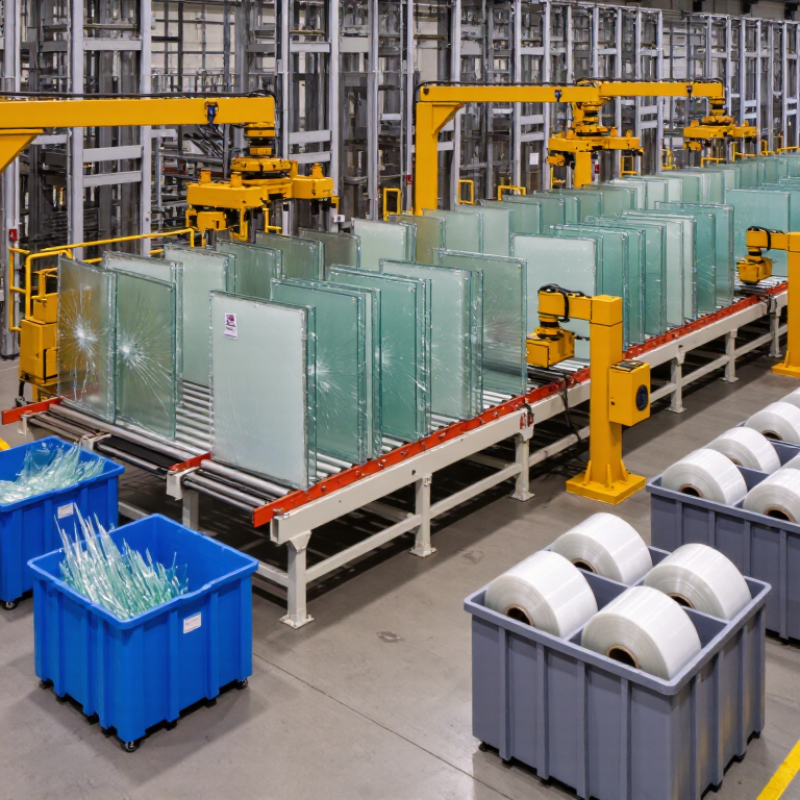
How to Recycle Broken Laminated Windshields?

Identify the two glass plies and PVB interlayer in a laminated windshield

A broken windshield is a layered assembly, not a single sheet of glass. Inspect an exposed edge for two separate glass plies with a thin polymer layer between them. Angled light can help reveal the seam. Look closely. Do not confuse tint, coatings, or crack haze with the interlayer. Most automotive laminated glass uses polyvinyl butyral (PVB), which bonds the plies and helps hold fragments after impact. The National Glass Association’s technical guidance describes this glass-and-interlayer construction; a commonly used PVB interlayer is about 0.76 mm thick, though designs vary.

Check both faces and the edge before sorting material. If the glass is heavily shattered, keep clear of loose fragments and ask a trained processor to confirm the layers. PVB can remain attached to the glass, so a cloudy film or flexible strip at a broken edge may be the interlayer—not another glass ply.

The European Commission’s End-of-Life Vehicles Directive sets reuse-and-recycling targets of 85% and reuse-and-recovery targets of 95% by vehicle weight. Those figures apply to whole vehicles, not to windshield glass alone, so they should not be read as windshield recycling rates.

Check the interlayer: 0.76 mm PVB is a common industry specification

A broken laminated windshield can look like ordinary glass, but its edge tells a more useful story. Two glass sheets usually sandwich a plastic interlayer, often polyvinyl butyral (PVB). A 0.76 mm PVB layer is a common industry specification, not a guarantee for every vehicle. Check a clean, exposed edge with a ruler or caliper; avoid handling sharp fragments. Look closely. Clouding, dirt, and fragments can make the layer hard to identify. ISO 12543 covers laminated glass and its testing, but thickness alone does not confirm a windshield’s full composition.

That distinction matters during recycling. A specialist processor may separate glass from PVB, while mixed or contaminated material can reduce its usefulness. The European Commission’s end-of-life vehicle framework sets an 85% reuse-and-recycling target by average vehicle weight; this is not a windshield-specific recycling rate. Keep that context clear. A thickness check helps with sorting, but it is not a complete test. Ask the recycler whether it accepts laminated glazing and how it handles the interlayer. It is tempting to treat 0.76 mm as a simple answer. It is only one clue.

How to Recycle Broken Laminated Windshields

Check the interlayer: 0.76 mm PVB is a common industry specification.

Common nominal PVB interlayer thicknesses in laminated glass include 0.38, 0.76, and 1.14 mm. The 0.76 mm option is widely used in automotive glazing. Identifying the interlayer can help recyclers choose suitable separation and processing methods; actual specifications vary by product.

Separate windshields from container glass before recycling

How to Recycle Broken Laminated Windshields?

Separate windshields from container glass before recycling

A broken windshield is not the same material as a bottle. It has two glass layers bonded with a plastic interlayer, usually PVB. After breakage, many fragments remain attached to that layer. Mixing them with bottle and jar cullet can introduce plastic and disrupt glass processing. Keep windshield pieces separate. Never put them in a household container-glass bin unless your local program specifically accepts them. Sharp edges matter, too. Use a sturdy, closed container and avoid handling loose shards.

The distinction is reflected in industry data. FEVE reported an 80.1% recycling rate for European glass packaging in 2021; that figure applies to packaging, not windshields. Glass for Europe’s 2020 circularity report estimated that Europe generates about 1.5 million tonnes of flat-glass waste each year. These streams need different handling. Ask your local waste authority or an automotive-glass recycler whether it accepts laminated windshields and can separate glass from PVB. It is easy to assume “glass is glass.” That assumption can send a recoverable material to the wrong process. Collection options vary, so check before transporting broken pieces.

Send units to specialist processors for glass–PVB delamination

How to Recycle Broken Laminated Windshields?

A broken windshield is not ordinary glass. A thin PVB layer bonds the glass sheets, so standard glass recycling lines may not separate them properly. Send units to specialist processors equipped for glass–PVB delamination. Before pickup, ask what they accept: loose shards, whole damaged panes, or both. Requirements can differ.

At a specialist facility, workers may remove attached trim, sort the material, and use controlled mechanical processing to separate glass from PVB. The recovered materials can then be assessed for suitable uses. Clean loads are easier to process; dirt, metal clips, and other mixed materials can lower recovery quality. Not every shipment becomes usable feedstock. That limitation deserves an honest mention.

Tips: Keep broken pieces contained and covered, and avoid separating layers by hand. Label the load clearly. Ask the processor about container and transport requirements before hauling it. Some details are easy to miss, and local collection options may be limited.

Route recovered glass cullet and PVB to suitable secondary uses

How to Recycle Broken Laminated Windshields?

A broken windshield contains glass bonded to a plastic interlayer, so the materials need separating before reuse. Processors typically crush the glass and use screening, washing, and mechanical or other separation methods to remove PVB film and fine debris. Small glass fragments may still carry adhesive or plastic. That matters.

Clean glass cullet can be directed to glassmaking when its size, color, and contamination levels meet a buyer’s specifications. Where it does not, suitable outlets may include glass-based construction products or other mineral applications. These uses depend on local facilities and material quality; cullet is not automatically interchangeable with standard glass feedstock. A sample test can reveal unwanted metal, ceramic, or PVB residue before a shipment is routed.

The recovered PVB may be washed, dried, and processed for reuse in applications such as plastic compounds or sound-damping products, depending on its purity and condition. Some material may be too degraded or contaminated for higher-value uses. Not every load qualifies. Keep glass and film streams separate, document visible contamination, and confirm acceptance requirements with the receiving processor. Separation is rarely perfect, and that is worth acknowledging when estimating recovery rates or choosing a destination.

How to Recycle Broken Laminated Windshields? — Route Recovered Glass Cullet and PVB to Suitable Secondary Uses

Material or Stage Recommended Handling Potential Secondary Use Key Quality or Safety Consideration
Incoming broken windshields Collect separately from ordinary window glass and other vehicle glass. Keep loads contained and limit unnecessary breakage during handling. Feedstock for specialist laminated-glass recycling. Windshields contain a plastic interlayer, so they generally require different processing from monolithic glass.
Pre-processing and sorting Remove accessible frames, seals, clips, and other non-glass components. Sort out visibly unsuitable or heavily contaminated material. Cleaner glass and polymer fractions for further processing. Use suitable protective equipment and handling procedures for sharp glass; follow local waste rules.
Glass and interlayer separation Use a specialist mechanical separation process, often involving controlled crushing and screening, to separate glass fragments from the interlayer. Glass cullet and recovered polyvinyl butyral (PVB) for evaluation as separate feedstocks. Separation efficiency and output quality depend on the windshield construction, contamination, and equipment used.
Recovered glass cullet Screen and clean the glass fraction; remove residual PVB and non-glass contaminants to meet the receiving processor’s specifications. Potential use in glass-fiber production, glass foam, ceramic products, or other suitable glass-based applications. Use in container-glass or flat-glass production is subject to strict composition and contamination requirements; acceptance is not guaranteed.
Recovered PVB interlayer Clean and condition the polymer fraction. Assess residual glass, moisture, coatings, and polymer quality before selecting an outlet. Potential feedstock for suitable recycled-PVB products, such as polymer compounds, damping materials, or adhesive-related applications. Material properties and contamination levels determine whether the PVB can be reused; some fractions may need further treatment or another authorized route.
Quality checks and shipment Record the source and processing batch; check material composition and cleanliness against the receiving facility’s acceptance criteria. More consistent secondary raw materials and traceable recycling outputs. Confirm outlet specifications and applicable transport and waste requirements before shipping either fraction.

FAQS

How can I identify a laminated windshield?

Inspect an exposed edge. Two glass plies usually sandwich a thin plastic interlayer, often PVB. Look closely.

Is the PVB layer always 0.76 mm thick?

No. About 0.76 mm is common, but designs vary. Thickness alone cannot confirm the full composition.

What can the interlayer look like after breakage?

It may appear as a cloudy film or flexible strip. Some glass fragments stay attached to it.

Can broken windshield glass go in a bottle-and-jar recycling bin?

Usually not. Use that bin only if the local program specifically accepts laminated windshields.

How should I handle broken windshield pieces?

Avoid loose shards. Place pieces in a sturdy, closed container, and let a trained processor check heavily shattered material.

Who can recycle a laminated windshield?

Ask an automotive-glass recycler or local waste authority. Confirm it accepts windshields and can separate glass from PVB.

Why keep windshields separate from container glass?

Their plastic interlayer can disrupt processing. “Glass is glass” sounds reasonable, but it can send material to the wrong stream.

Do vehicle recycling targets describe windshield recycling rates?

No. Targets such as 85% recycling and 95% recovery apply to whole vehicles by weight, not windshields alone.

Conclusion

Can you recycle broken laminated windshields? In many cases, yes, but they need specialized processing. A laminated windshield typically consists of two layers of glass bonded to a plastic interlayer, commonly polyvinyl butyral (PVB). A thickness of 0.76 mm is a common industry specification for this interlayer. Because the layers are firmly bonded, a broken windshield cannot usually be recycled in the same way as ordinary container glass.

Keep damaged windshields separate from bottles and jars, then send them to a processor equipped to separate the glass from the PVB. After delamination, the recovered glass can be processed into cullet for suitable secondary uses, while the PVB may be prepared for other applications where its condition and quality allow. Separating the materials at the outset helps prevent contamination and gives both components a better chance of being recovered effectively.

Madeline

Madeline

Madeline is a dedicated marketing professional with a wealth of expertise in our company's core offerings. With a keen understanding of the industry, she brings a unique perspective to her role, consistently delivering high-quality content that highlights the superior aspects of our products. As......