As the primary industrial port city of northern Vietnam, Hai Phong is fast becoming a core logistics and automotive production hub in Southeast Asia. Driven by the expansion of large-scale industrial parks such as DEEP C, Nomura, and Trang Due, the demand for modern urban mobility has skyrocketed. Public transportation systems, airport shuttles linking to Cat Bi International Airport, and employee commuter fleets are upgrading rapidly. This rapid urbanization requires robust safety components, with Curved Toughened Glass for Buses acting as a critical component in ensuring passenger safety, vehicle durability, and aerodynamic efficiency.
Operating passenger vehicles in coastal environments like Hai Phong presents extreme engineering challenges. The local climate is characterized by high humidity, elevated atmospheric salinity, and severe seasonal typhoons. Standard glass solutions degrade quickly under continuous exposure to salt spray, leading to glass corrosion, micro-fracturing, and a decrease in structural performance. Premium tempered glass and laminated options, engineered with chemical-resistant coatings and advanced tempering profiles, are essential for resisting the environmental factors of coastal transit networks.
With major domestic developments, such as the growth of national electric vehicle manufacturers based locally, Hai Phong's demand for high-end automotive glass is growing. The region represents a strategic intersection where global transport safety standards meet regional industrial requirements, requiring components that satisfy rigorous certifications while remaining cost-effective.
Procuring automotive safety glass for modern bus fleets requires strict adherence to international safety metrics. OEM design and maintenance standards dictate that every curved window, double-glazed panel, and laminated front windshield must undergo rigorous mechanical testing. From optical clarity to stress distribution, even minor defects can jeopardize passenger safety and increase fleet operating costs.
Anhui Aero Glass Co. Ltd designs glass solutions to meet and exceed global regulatory standards, securing critical certifications that allow access to demanding global markets:
Our quality control is structured to verify glass properties through automated visual scanning, coordinate measuring machine (CMM) testing, and thermal cyclability checks. This keeps production errors low, assuring that curved side windows and windshields integrate smoothly with bus body weldments during assembly.
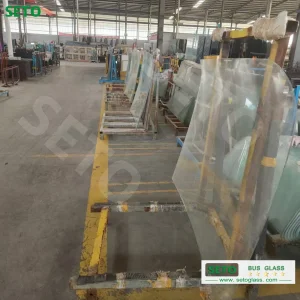
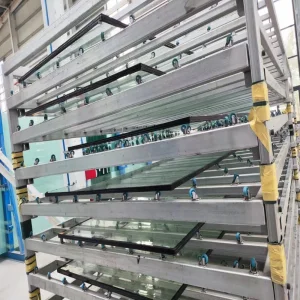
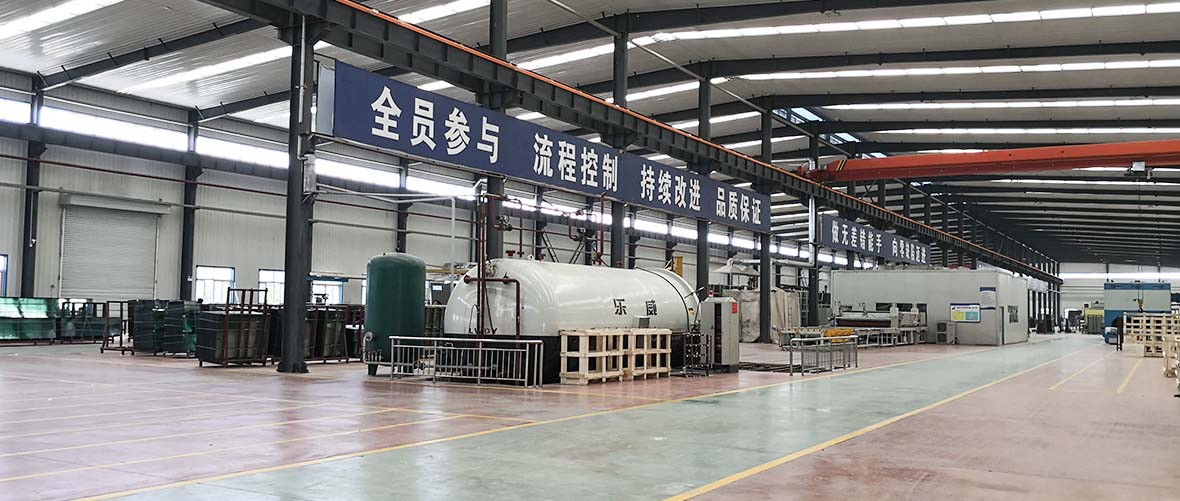
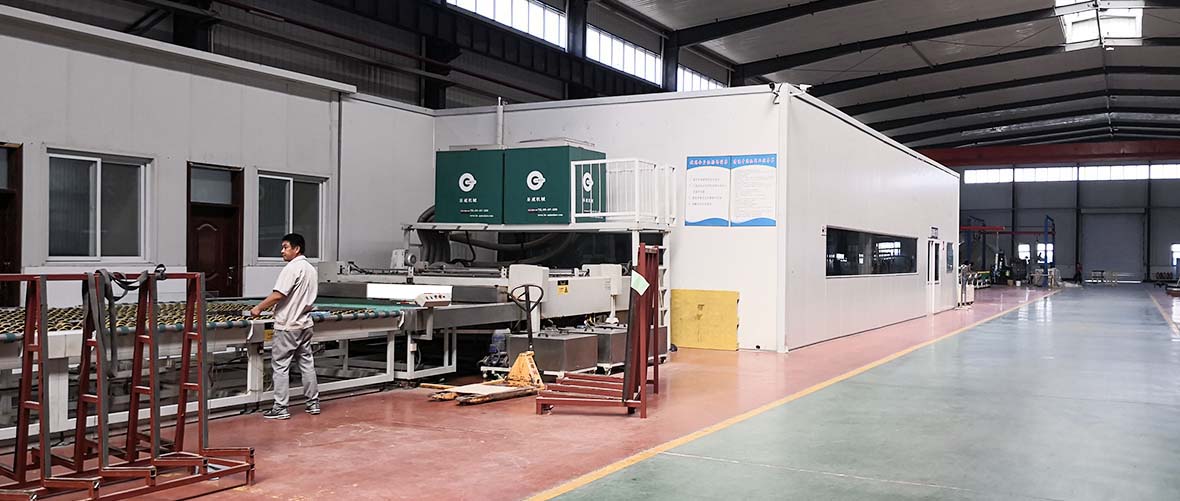
In modern automotive manufacturing, procurement managers must balance cost optimization with supply chain stability. Anhui Aero Glass Co. Ltd operates a state-of-the-art 30,000 square meter facility utilizing Factory 4.0 protocols. By deploying CNC grinding centers, automated bending furnaces, and advanced quality assurance lines, we ensure high repeatability and precision for every batch of curved toughened glass.
Our tempering lines feature multizone convective heating, controlling surface temperatures within ±3°C. This prevents optic hot-spots and waviness, ensuring clear sightlines through deep-bent glass panels.
Located close to major Chinese ports, we coordinate secure freight shipping directly to the Port of Hai Phong. This logistics route supports just-in-time assembly schedules for domestic bus bodybuilders.
With 12 senior and intermediate technical specialists, we work closely with your design team. We convert CAD/3D files into production specifications to match specialized frame tolerances.
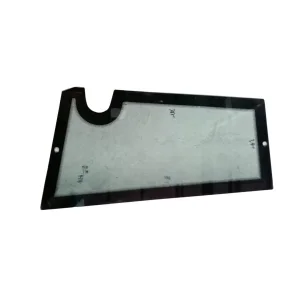
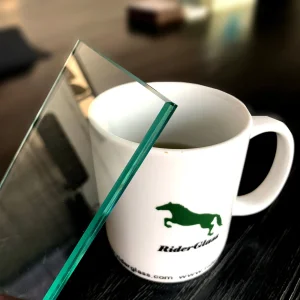
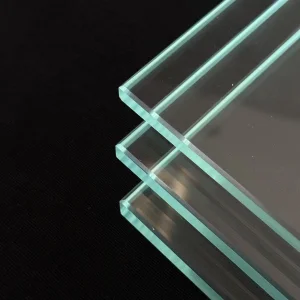
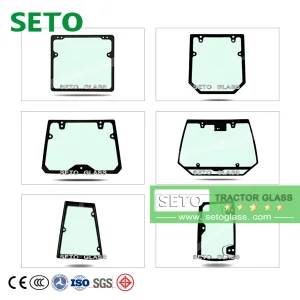
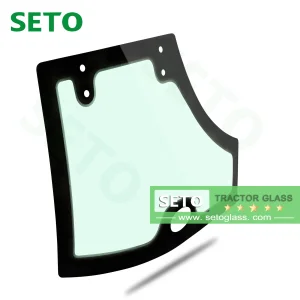
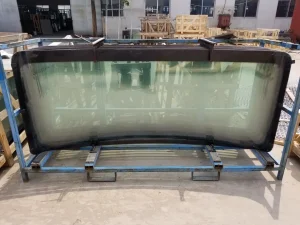
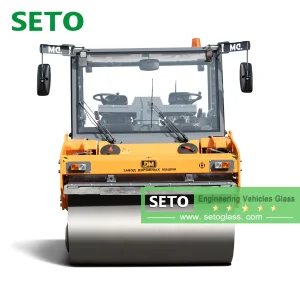
Curved toughened glass enhances aerodynamic performance, reducing the drag coefficient of large-bodied vehicles like city buses and long-distance coaches. Structurally, the curved form distributes mechanical loads more effectively than flat sheets, increasing resistance against crosswinds and vibrations. From an aesthetic perspective, curved profiles align with modern bus design, offering passengers panoramic field-of-view visibility and reducing cabin glare.
To resist the corrosive atmosphere of coastal locations such as Hai Phong Port, our glass undergoes optimized heat treatment profiles that eliminate internal stress variation. We use raw float glass with low iron content and apply protective sealants along edge configurations. For laminated windshields, we use premium moisture-resistant PVB (polyvinyl butyral) interlayers that prevent delamination and optical hazing caused by continuous exposure to salt spray and high relative humidity.
Anhui Aero Glass Co. Ltd maintains compliance certifications required for global distribution, including: China CCC (Compulsory Certificate), European Union E-Mark (ECE R43), and United States DOT (FMVSS 205). Our factory processes operate under IATF 16949 and ISO 9001 quality management guidelines, ensuring that our products meet OEM expectations.
MOQs vary based on design customization requirements (e.g., specific dimensions, custom curvatures, or tint configurations). Standard lead times range between 15 to 30 days from project finalization. Thanks to our proximity to deepwater ports, shipments from China to the Port of Hai Phong are fast and efficient, minimizing supply chain lead times for our Vietnam partners.
Yes, we offer custom glass engineering using CAD and 3D files. We integrate precision cuts, screen-printed ceramic frits, and mounting brackets for Advanced Driver Assistance Systems (ADAS) sensors, cameras, and heating grids directly onto the curved glass surfaces during manufacturing.
Partner with a certified automotive safety glass manufacturer. Connect with our engineering department to receive custom designs, technical datasheets, and a comprehensive quote tailored to your local requirements.
Send Inquiry Now Aero Glass