Modern commercial space design, luxury retail networks, and laboratory fit-outs demand structural glass shelves that go far beyond aesthetics. Today’s procurement directors focus on load-bearing capacities, deflection coefficients, and rigid compliance frameworks.
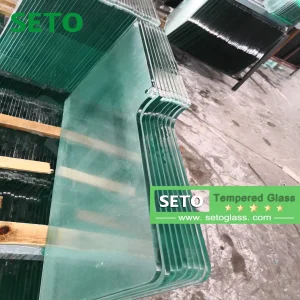
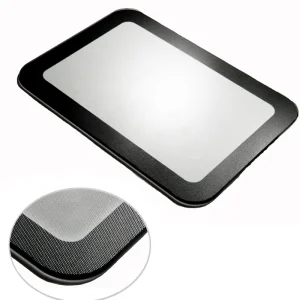
Global supply chains require products that comply with strict harmonized norms. Standard flat glass displays are insufficient. Industrial environments demand tempered soda-lime silicate glass that complies with EN 12150-1 (Impact Safety and Fragmentation) and possesses precise CNC flat-polished edges with radius corners. Crucially, engineering projects calculate structural margins using finite element analysis (FEA) to confirm safety against sudden mechanical stress or thermal shocks.
Accurate load limit formulas determine target glass thicknesses (typically 8mm, 10mm, 12mm, or 19mm laminated panes) depending on spans up to 1500mm.
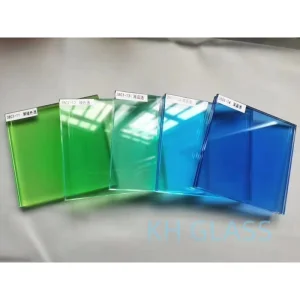
Integrating low-iron (ultra-clear) glass chemistry to eliminate green edge-tinting, aligning with premium architectural lighting systems.
Ensuring compliance with the European Construction Products Regulation (CPR 305/2011) to eliminate import customs hold-ups.
Our industrial solutions address structural load requirements across key commercial and manufacturing sectors.
| Sector / Vertical | Critical Glass Requirement | Technical Standards & Edge Profiles | Structural Safety Mechanism |
|---|---|---|---|
| Luxury Retail Stores | Maximum Optical Clarity (91%+ Light Transmittance) | Ultra-Low Iron (Optiwhite), Flat-Polished, Arrissed Corners | Thermal toughening to resist spot heating from display LEDs |
| Laboratories & Medical | Chemical Corrosive Protection & Inertness | Borosilicate / Tempered Soda Lime, Non-porous surfaces | Zero-particle release matching cleanroom standards |
| Heavy-Load Storage | Deflection limitation under distributed static loads | Thick tempered laminate (10mm+10mm with PVB/SGP) | Post-glass fracture containment prevents collapse |
| Automotive Showrooms | Large-span durability & dynamic vibrations resistance | Heavy-duty monolithic tempered glass (12mm to 19mm) | High flexural tensile strength (120 N/mm²) |
* Note: The structural load formulas must calculate elastic deformation limits to ensure that maximum central deflection does not exceed L/100 of the span length.
Applying rigorous automotive safety standards to industrial structural glass shelving and architectural display systems.
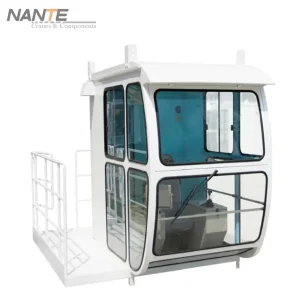
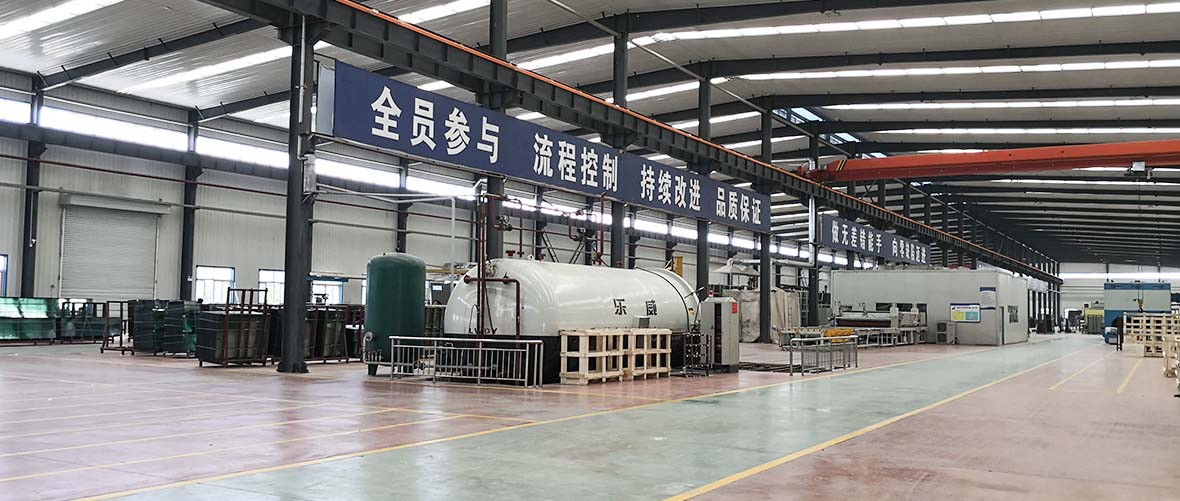
Anhui Aero Glass Co. Ltd is a professional automotive and specialized industrial glass manufacturer. Our operations integrate research, development, production, and global sales of safety glass. While our legacy is built on advanced automotive glass—including laminated glass, tempered safety glass, frames with glass, tungsten heated glass, and engineering vehicle panels—our core thermal processing, laminating, and CNC edging technologies allow us to manufacture high-spec CE-certified glass shelving units for industrial applications.
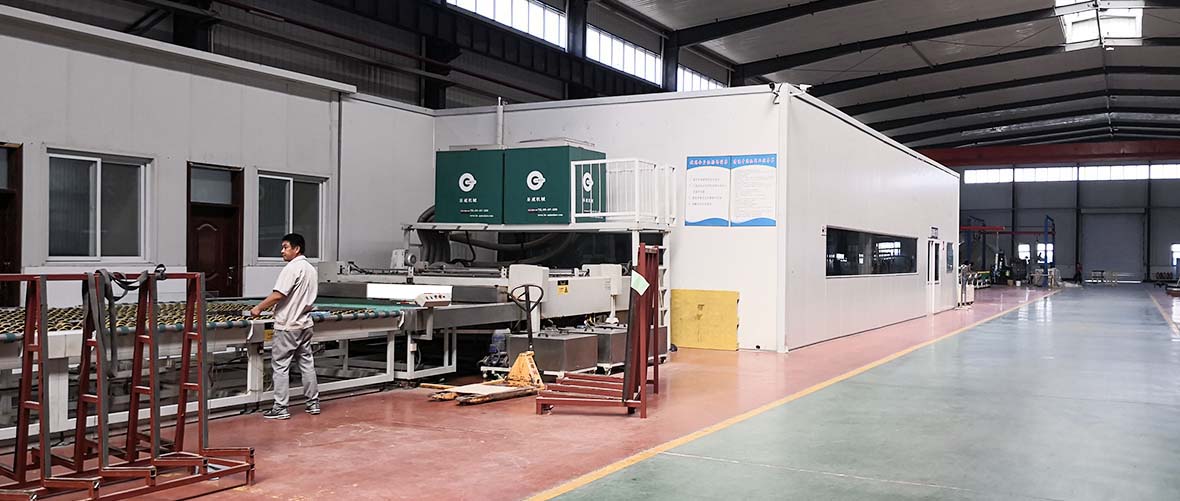
Our rapid growth has built an operation spanning over 30,000 square meters, staffed by over 100 skilled personnel, including 12 senior and intermediate technicians. Our machinery handles complex custom shaping, multi-stage edge polishing, and high-volume chemical and thermal glass tempering.
Our structural products conform to international quality baselines, certified by China CCC, European E-Mark, and U.S. DOT. In 2015, we achieved ISO/TS-16949 and ISO-9001 certifications—representing the highest standards in the glass manufacturing industry.
Architectural layouts are demanding active performance layers. The integration of structural glass shelving with electronic interfaces, energy management, and smart light systems defines our R&D direction.
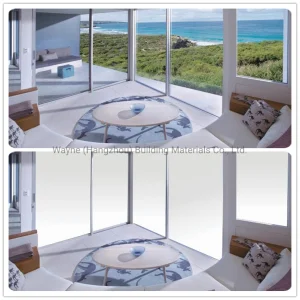
By adapting our PDLC Switchable Smart Glass technology into display modules, we offer shelving units that transition from ultra-clear to frosted opaque with a simple switch, opening up new options for high-end retail merchandising and museum displays.
Adapting high-transmittance (92%+) tempered solar glass coatings with low-emissivity (Low-E) layers enables modern display cases to efficiently diffuse natural light while reducing UV radiation by up to 99%, protecting sensitive exhibits.
Utilizing high-performance acoustic PVB and SGP interlayers inside structural glass sandwiches dampens building and traffic vibrations, preventing structural resonance and reducing micro-cracks in high-load commercial shelving.
With a supply footprint in over 20 countries and regions including Europe, North America, Southeast Asia, and Africa, Aero Glass ensures smooth customs handling and reliable local project compliance.
We work directly with structural engineers, project managers, and procurement officers to provide custom documentation packs for major construction and fit-out sites. From mechanical stress tests under EN 12600 to fragmentation calculations for safety approval, we verify that our products are ready for immediate site approval.
Common questions regarding technical specifications, load-bearing capacities, and regulatory standards for commercial glass installations.
For a span of 1200mm supporting a 30kg static load, we recommend a minimum thickness of 12mm monolithic tempered safety glass or 6mm+6mm laminated tempered safety glass. These thicknesses keep deflection safely within the L/100 limit, maintaining long-term stability and structural safety.
CE certified glass under EN 12150-1 undergoes strict testing for mechanical strength, flat tolerance, and safety fragmentation. In the event of failure, the glass breaks into small, relatively harmless granules rather than sharp shards. This certification is essential for building control approvals in Europe and international public spaces.
Standard clear glass contains iron oxides that produce a green tint, which becomes more noticeable as the glass thickness increases. Low-iron glass (such as Optiwhite) reduces this iron content, resulting in excellent clarity, high light transmission (91%+), and true-to-life display coloring.
Yes. We offer custom glass processing through our CNC cutting, drilling, and edge-polishing equipment. All custom shapes, holes, and internal cutouts must be completed before the tempering process to avoid compromising the structural integrity of the safety glass.
 Aero Glass